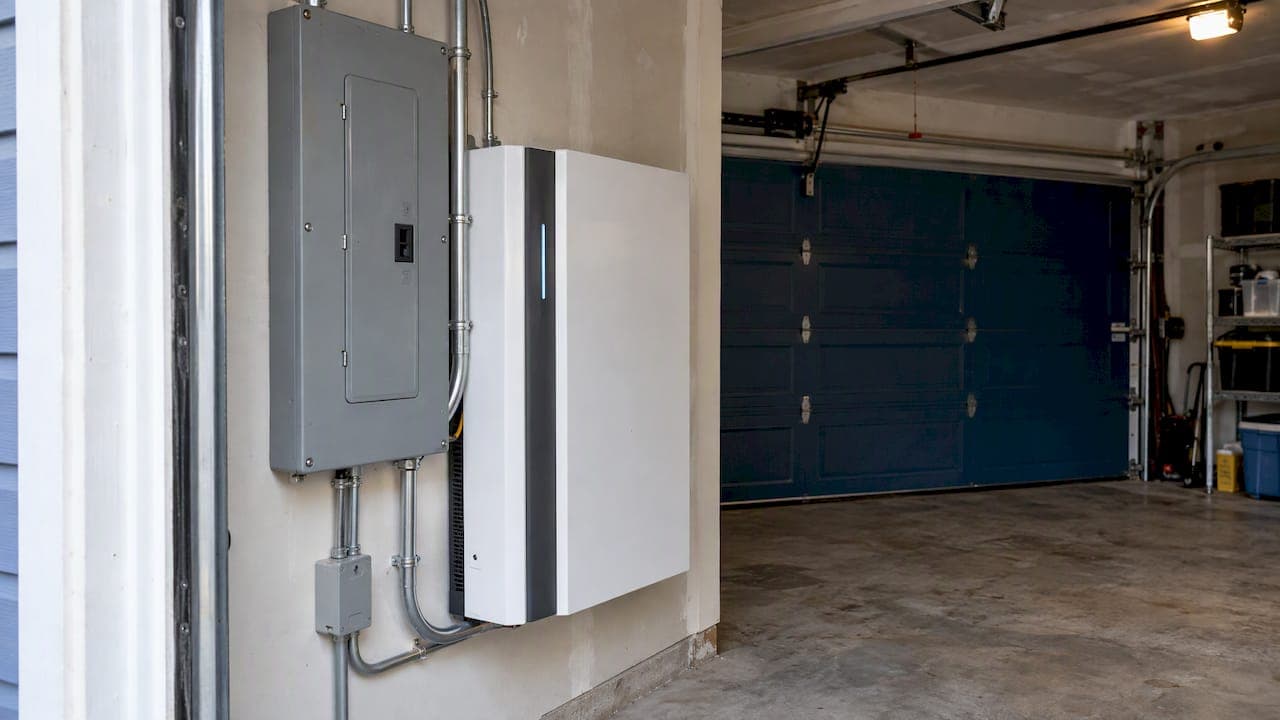
A battery backup for medical equipment is a rechargeable power source that takes over when grid power stops, so a device such as a CPAP machine, oxygen concentrator or medication refrigerator keeps running. The right size depends on the watts each device draws and the hours you need it. Small devices can run from a portable battery or a UPS. Households that depend on equipment through multi-hour or multi-day outages often look at a permanently installed home battery, with or without solar. Current RS is a Delaware installer of residential solar and battery storage. It is not a utility, a medical provider or a government agency. This guide explains the options, shows how to calculate capacity, and lists the safety steps to take with your medical provider before an outage.
TL;DR
- Portable batteries and UPS units suit short outages and low-wattage devices. Installed home batteries suit longer outages and several devices at once.
- Estimate need in watt-hours: device watts multiplied by hours of use, added up for every device that matters.
- Talk to your medical provider about a written outage plan for each device and any refrigerated medicine. Check device compatibility with the manufacturer.
- Ask your electric utility whether it keeps a priority list for customers with a medical need.
- Current RS designs and installs solar and battery systems in Delaware. A personalized eligibility and system review starts at the Delaware SHINES page.
Table of Contents
- What a battery backup device does for medical equipment
- What type of battery is inside medical devices
- Do CPAP machines have a battery backup?
- How to calculate the battery capacity you need
- How long should backup last?
- What should not be plugged into a UPS
- Safety steps before an outage
- When a home battery makes sense
- Adding a battery to existing solar in Delaware
- Delaware SHINES and utility requirements
- How Current RS can help
- FAQ
- Sources
What a battery backup device does for medical equipment
A battery backup device stores energy while the grid is on and releases it when the grid fails. The Oregon Department of Emergency Management describes battery backup systems as portable and quiet, and suited to short-term outages. It describes UPS units as providing immediate backup for short periods.
There are three common forms:
- A UPS (uninterruptible power supply). It sits between the wall outlet and the device. A UPS powers equipment nearly instantaneously during a brief interruption. Line-interactive models correct sags and surges. Online double-conversion models provide full conditioning.
- A portable power station. This is a larger battery with several outlets, usually moved by hand. It is charged from the wall, and some models can also charge from a car or panels.
- An installed home battery. A battery is wired into the home's electrical system by a licensed installer. It can power selected circuits or the whole house, and it can recharge from solar panels during an outage.
The first two are products you plug in. The third is a designed system with permitting, utility requirements and a load plan. That difference matters most when the equipment is something you cannot do without.
What type of battery is inside medical devices
The battery inside a device is not the same as a backup battery you add. Implantable devices, such as defibrillators, use primary (non-rechargeable) lithium cells. A peer-reviewed review notes that lithium/silver vanadium oxide is the most common system in implantable cardioverter-defibrillators. You never replace or back up those at home.
Most home equipment is different. For many nonimplantable devices, the machine normally runs on grid AC power and its internal rechargeable battery serves as backup or supports movement within a hospital. That internal battery is often small. It is designed for a short interruption or a trip across a room, not for a long outage.
Rechargeable lithium-ion and nickel-metal hydride packs also age. MedTechLearning notes that calendar ageing and cycle-related degradation can reduce runtime. A device battery that lasted four hours when new may last less after several years. Test any backup source under real conditions, and replace batteries on the maker's schedule.
Do CPAP machines have a battery backup?
Most CPAP and BiPAP machines are built to run from a wall adapter. Many do not include a battery. Some offer an optional battery accessory or a DC power cord that connects to an external battery. Whether a battery is compatible depends on the model, voltage and connector. Check the manual or ask the device supplier before you buy anything.
One practical point comes from a published review of power options for positive airway pressure devices. It recommends using the device without the humidifier when running on DC power, because the humidifier drains the battery faster. Your sleep provider can tell you what settings are appropriate for you during an outage.
AdvaMed, the medical technology trade association, says that the device manufacturer should specify battery chemistry, voltage, capacity and charging characteristics for the intended application. In plain terms, the manufacturer's specifications decide what is safe to connect, not the label on the battery.

How to calculate the battery capacity you need
The method is simple arithmetic. The University of Colorado Denver's emergency preparedness program explains it this way: multiply each device's watts by the hours used per day to get watt-hours, then add the totals.
Use watt-hours (Wh) or kilowatt-hours (kWh), not amp-hours alone. MedTechLearning points out that capacity in amp-hours does not determine runtime by itself. Energy in watt-hours is a better measure, and it is roughly nominal voltage multiplied by capacity.
A worked example with illustrative numbers
The wattages below are placeholders to show the method. Your devices will differ. Read the rating label on each device or its manual.
| Device (illustrative) | Watts | Hours per day | Watt-hours per day |
|---|---|---|---|
| Sleep therapy machine | 40 | 8 | 320 |
| Oxygen concentrator | 300 | 24 | 7,200 |
| Small medication refrigerator | 60 | 8 (running time over 24 hours) | 480 |
| Phone charger and a few lights | 50 | 6 | 300 |
| Total | 8,300 (8.3 kWh) |
Four things change the result:
- Startup surge. Motors and compressors draw more when they start. The battery and inverter must handle that peak, not just the running watts.
- Efficiency losses. Inverters and batteries lose some energy as heat. Plan for usable capacity below the label figure.
- Duration goal. Multiply daily watt-hours by the number of days you want to cover.
- Recharging. A battery with no way to recharge only delays the problem. Solar panels can refill an installed battery during daylight, weather permitting.
For a longer treatment of home-scale sizing in Delaware, see how much battery storage a Delaware home needs.
How long should backup last?
There is no single number that fits every patient. A University of Colorado Denver guide for battery use during outages gives a baseline: priority should go to powering essential medical devices for at least 72 hours. The same guide recommends evacuation if power falls below 4 hours of backup. Those figures are planning baselines, not medical advice. Your clinician sets the real requirement for your treatment.
This is where the three options separate:
| Option | Typical role | Strength | Limit |
|---|---|---|---|
| UPS | Bridge a brief interruption | Switches over almost instantly | Short runtime, small loads |
| Portable power station | Run one or a few devices for hours | Movable, plug-and-play | Must be recharged by hand or by separate panels |
| Installed home battery | Power chosen circuits or the whole home | Switches automatically, can pair with solar | Requires design, permits and utility approval |
When the equipment cannot stop, the speed of switchover matters as well as the runtime. Ask the device maker whether the equipment tolerates the brief transfer time of the backup source.
What should not be plugged into a UPS
A UPS has a power rating in watts or volt-amperes. Anything that draws more than that rating, or that draws a high surge when it starts, can overload it. In general, avoid connecting:
- Space heaters and other heating appliances, which draw large continuous power.
- Devices with compressors or large motors, unless the UPS maker states that it supports them.
- Anything whose manual says not to use it with a UPS or inverter.
UPS units sold for office electronics are not automatically suited to life-supporting equipment. Check the UPS documentation and the medical device documentation, and ask your equipment supplier or clinician when the device supports breathing, circulation or medication delivery.
Safety steps before an outage
Planning with people matters as much as buying equipment. Ready.gov, the federal preparedness site, advises that people who depend on electric-powered medical equipment talk to their medical provider to create a specific outage plan for their devices and refrigerated medicines. Its checklist includes:
- Make an inventory of the items you need electricity for.
- Plan alternative power sources for each.
- Discuss the plan with your medical provider.
- Install battery-backed carbon monoxide detectors on every level of the home.
The carbon monoxide step is relevant if you consider a fuel generator. Generators should be run outdoors, away from the home. Battery systems produce no exhaust, which is one reason some households compare the two. Current RS has a comparison of battery storage and generators for Delaware homes.
Two more steps are worth taking now:
- Ask your electric utility about medical needs programs. FEMA's caregiver resources encourage people to ask their electricity supplier about priority restoration lists or battery backups for qualifying customers. Programs and eligibility differ by utility, so ask your own utility directly and request the terms in writing.
- Do not count on a shelter as your plan. A CDC report notes that people without reliable backup power may rely on emergency departments or shelters to plug in devices, and that rising outage numbers call for new solutions. A home-based plan reduces that dependence.
When a home battery makes sense
A portable unit or UPS is a reasonable first layer. A permanently installed battery becomes worth considering when:
- The equipment runs many hours a day, such as an oxygen concentrator.
- Several devices need power at once, including a refrigerator for medication.
- The person using the equipment cannot easily move, connect or restart a portable unit during an outage.
- Outages in your area have lasted long enough to exhaust portable batteries.
- You already own solar and want it to keep producing power when the grid is down.
A home battery does not make a house independent of the grid in every situation. Its runtime depends on its capacity, what you connect and the weather if solar recharges it. Current RS does not promise complete off-grid autonomy. It designs backup around a load list that you and your clinician confirm. For background on how battery backup works, see the Current RS battery backup explainer and its page on battery reliability.
Critical loads or the whole home
Backup can cover only selected circuits or the entire house. A critical-loads design powers items like the medical equipment room, refrigerator, lighting and internet. It stretches stored energy over more hours. A whole-home design keeps more of the house running, and it needs more battery capacity. Current RS describes the second approach on its whole-home backup page and in a guide to whole-home backup.

Adding a battery to existing solar in Delaware
Standard grid-tied solar panels shut down during an outage, as a safety measure for utility workers, unless the system includes the equipment for islanded operation with a battery. Owning panels alone therefore does not guarantee power during an outage.
Homeowners with existing solar can often add storage. The right method depends on the inverter type, the age and condition of the system, the main electrical panel and the utility's interconnection rules. An installer reviews those items before proposing equipment. Current RS covers the process in adding a battery to existing solar. If the work also needs inverter replacement or electrical upgrades, Current RS lists those among its services.
Delaware SHINES and utility requirements
Delaware SHINES is a state solar incentive program. Eligibility, incentive amounts and availability depend on your electric utility and on the current program rules, and they change. Current RS does not set or approve incentives. Always check the official program source for current terms before you decide, and do not assume a battery qualifies for any amount. Current RS has answered common questions in its Delaware SHINES battery FAQ and on its Delaware SHINES FAQ page.
How Current RS can help
Current RS designs and installs residential solar and battery storage systems in Delaware. Its services include battery backup, whole-home backup, hybrid energy systems, solar installation and a Delaware SHINES eligibility review. The company works as an installer. It is not a utility or a government agency, and it does not guarantee program approval, savings or free equipment. Prices are not published, so a quote follows a review of your home and loads.

If medical equipment is part of why you are considering backup power, include it in your request. Request a personalized eligibility and system review at currentrs.com/delaware-shines and provide:
- Your ZIP code
- Your electric utility
- Whether you own your home
- Whether you already have solar
- Your electricity usage (a recent bill helps)
- Your project timeline
Current RS cannot give medical advice. Confirm each device's power needs and acceptable runtime with your medical provider and the device manufacturer.
FAQ
What is a battery backup device?
It is a rechargeable energy store that supplies power when the grid is down. Forms include a UPS, a portable power station and an installed home battery. Emergency management guidance describes portable battery systems as quiet and suited to short outages.
What cannot be plugged into a UPS?
Avoid anything that draws more than the UPS rating, including space heaters and high-surge motor loads, and anything whose manual prohibits UPS use. For life-supporting medical equipment, confirm compatibility with both manufacturers and your clinician.
Do CPAP machines have a battery backup?
Many run from a wall adapter only. Some models offer an optional battery or a DC input for an external battery. Check your model's manual, and consider using it without the humidifier on battery power, since the humidifier drains the battery faster.
How many watt-hours do I need for home medical equipment?
Multiply each device's watts by its daily hours, then add the totals and multiply by the days you want to cover. Add margin for startup surges and efficiency losses. Your clinician sets the minimum runtime your treatment requires.
Can a home battery power medical equipment during an outage?
A properly designed battery system can supply selected circuits or the whole home, and solar can recharge it in daylight. Runtime depends on capacity and load. It is one part of an outage plan that also includes your provider and utility.
Sources
- Oregon Department of Emergency Management: alternative power sources for durable medical equipment
- Batteries, UPS, and Power Conditioning (Field Ready Academy)
- Batteries used to Power Implantable Biomedical Devices (PMC)
- Meeting power budgets and size requirements in medical device batteries (Embedded Computing Design)
- Batteries and Medical Devices (MedTechLearning)
- Portable power supply options for positive airway pressure devices
- AdvaMed: Successful Practices for Battery Powered Medical Devices
- University of Colorado Denver: Calculate Your Power Needs
- University of Colorado Denver: How to Use Your Battery to SIP
- Ready.gov: Power Outages
- FEMA: caregiver preparedness resources and FAQ
- CDC: Advancing Preparedness for Life Support Users During Power Outages