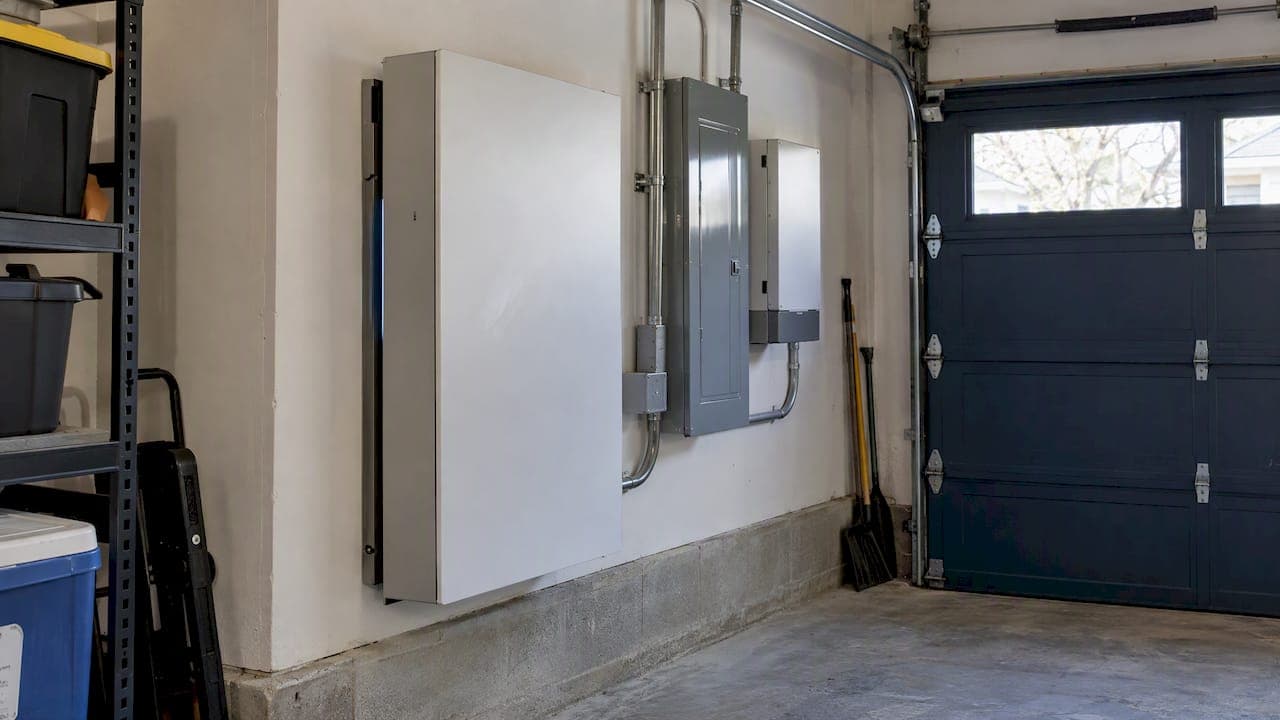
A solar battery installation in Delaware has five parts: a design sized to your home, an interconnection application to your electric utility, a licensed installation, utility approval, and an incentive application. The state's Solar + Storage Pilot Program can reduce the cost of a qualifying battery. Eligibility depends on your utility, on timing, and on the equipment. Current RS is a residential solar and battery installer. It is not a government agency or a utility. This guide explains each step so you can plan the project before you request quotes.
TL;DR
- The Solar + Storage Pilot Program is open to Delmarva Power & Light customers whose battery is permanently installed behind the meter. Check the current program guidelines before you sign a contract.
- As of August 11, 2026, the pilot lists a rebate of $250 per kWh of storage. The residential maximum is $6,000, and it cannot exceed 50% of the eligible storage cost.
- You can add a battery to existing solar. Under the pilot, the solar system needs interconnection approval within the last 12 months and an approved Green Energy Program solar rebate.
- Battery size depends on your usage and on which circuits you want powered in an outage. Backup is limited by the battery and the circuits chosen, and it is not unlimited power.
- Current RS offers a personalized eligibility and system review. Approval, savings and incentive amounts are never guaranteed.
Table of Contents
- What Delaware SHINES is and how it relates to batteries
- Who is eligible, and why your electric utility matters
- What the rebate pays, with worked arithmetic
- How to apply: the order of steps
- Adding a battery to existing solar
- Installing solar and a battery together
- Sizing the battery to your home
- Outage backup: partial home or whole home
- What solar battery installation costs in Delaware
- Siting, safety and what happens at installation
- Maintenance and monitoring
- Work with Current RS
- FAQ
- Sources
What Delaware SHINES is and how it relates to batteries
Delaware SHINES is a state initiative announced in September 2026. The Governor's office describes it as a solar and battery storage program for households, small businesses and nonprofits. The initiative coordinates state programs, legislative actions and utility efforts to lower energy costs and strengthen the grid.
For a homeowner, the practical question is which specific program pays for what. Delaware SHINES is the umbrella. The battery rebate itself is set out in the Solar + Storage Pilot Program guidelines published by the state's energy office. Those guidelines are the document to read, because they set eligibility, amounts and deadlines. Programs change, so confirm every figure on the official page before you commit.
Current RS reviews these requirements for homeowners as part of its Delaware SHINES eligibility review. For common questions, see the Delaware SHINES FAQ.
Who is eligible, and why your electric utility matters
Utility is the first filter. To qualify for the Solar + Storage Pilot Program, an applicant must be a Delmarva Power & Light electric customer with the battery permanently installed behind the meter at the premises. Behind the meter means the battery sits on your side of the utility meter and serves your home.
The guidelines also set a timing rule. The battery system must have final interconnection approval from Delmarva Power & Light no more than one year before the date you submit the application. This changes the order of work. You install, get utility approval, and then apply within the window. Missing the window can cost you the rebate.

If your home is served by a different electric provider, such as a municipal utility or an electric cooperative, do not assume the pilot applies. Read the guidelines for your situation and confirm with the program office. A utility-specific review at the start prevents buying equipment the program will not cover.
Homeownership matters too. You need authority to make a permanent installation at the property. Renters and tenants generally cannot, so the project usually starts with the homeowner.
Information that settles eligibility quickly
When Current RS reviews a project, these are the details that decide the path:
- ZIP code and electric utility
- Whether you own the home
- Whether you already have solar, and when it was approved and interconnected
- Your electricity usage, from recent bills
- Your project timeline
You can send all five through the Delaware SHINES page.
What the rebate pays, with worked arithmetic
As of August 11, 2026, the pilot lists a rebate of $250 per kWh for residential battery storage. The maximum residential grant is $6,000, and it cannot exceed 50% of the total eligible storage cost.
Three limits apply at once: the per-kWh rate, the dollar cap and the 50% ceiling. The following numbers are illustrations only, not a quote and not a promise of any amount.
| Illustrative battery capacity | Rate times capacity | Applies after the $6,000 cap |
|---|---|---|
| 10 kWh | $2,500 | $2,500 |
| 20 kWh | $5,000 | $5,000 |
| 24 kWh | $6,000 | $6,000 |
| 30 kWh | $7,500 | $6,000 |
The 50% ceiling then applies to the eligible cost. If eligible storage cost were $8,000, for example, the rebate could not exceed $4,000, whatever the per-kWh math says. Program staff decide the final amount after review, so the table shows how the formula works and nothing more.
Two practical points follow. A larger battery does not raise the rebate beyond the cap, so sizing should follow your needs and not the incentive. And the rebate reduces the cost of a project you still fund up front, so plan the cash flow.

How to apply: the order of steps
The state's Green Energy Program requires grant applications to go through Green Grant Delaware, after an acceptable energy audit and the selection of an approved renewable energy contractor. Confirm on that page which steps your project needs, since the process can be updated.
A typical sequence looks like this:
- Review eligibility. Confirm your utility, ownership and, if you have solar, its approval date.
- Complete the energy audit the program requires, and choose an approved contractor.
- Design the system. Size the battery and decide which circuits it backs up.
- Submit the utility interconnection application. Delmarva's Green Power Connection process asks for a Delaware Interconnection Application & Agreement and a fee that varies by nameplate capacity, before any renewable generator equipment is installed. That checklist dates from 2015, so confirm the current forms and fees with Delmarva.
- Install the battery with the required permits and inspections.
- Receive final interconnection approval from the utility.
- Submit the incentive application within one year of that approval.
Timelines vary with permitting, utility review and equipment availability, so no single duration fits every project. Ask your installer for a schedule built around your utility's current review times.
Adding a battery to existing solar
Homeowners with solar already on the roof are a large share of battery inquiries. Under the pilot, batteries can be added to an existing system if the solar installation received interconnection approval within the last 12 months and was approved for the Green Energy Program's solar rebate. The equipment must be commercially available, carry at least a 10-year manufacturer warranty, and pass Delmarva Power's standard interconnection process.
Beyond program rules, a retrofit raises technical questions an installer checks on site:
- Inverter type. Some systems use a string inverter, some use microinverters, and the battery connection differs. The existing inverter may be compatible, or the project may need a hybrid inverter or a separate battery inverter.
- Electrical panel and service. The main panel may need space or upgrades for backup wiring.
- Warranty status. Changes to a system under warranty should be reviewed against the manufacturer's terms.
- Monitoring. The battery should be visible in the same monitoring platform as the solar, or in its own.
A retrofit installed outside the 12-month window may not qualify for the pilot, though it can still be worth doing for backup. Current RS explains the process in its guide to adding battery storage to existing solar, and compares leading battery brands in this equipment comparison. If your solar is older or the inverter needs attention, a hybrid system design may be a better route than adding a separate unit.
Installing solar and a battery together
A new solar and storage project is often cleaner than a retrofit. One design covers the panels, inverter, battery and backup panel, and one interconnection process covers the full system. The installer can size the solar array around the battery and avoid duplicate electrical work.
Delmarva's guidance says homeowners can size renewable systems to meet up to 110% of their energy needs, per that 2015 checklist. Verify the current limit with the utility. Output also depends on weather and conditions: clouds, darkness, and dirty or snow-covered panels all reduce generation, and the same checklist says to account for them in sizing.
For solar projects, Current RS offers residential solar installation designed around household usage and, where wanted, battery storage.
Sizing the battery to your home
Battery sizing balances three things: how much energy you use, how much power you need at one moment, and how long you want to run through an outage.
Energy and power are different numbers
Capacity, measured in kilowatt-hours, is how much energy the battery stores. Power, measured in kilowatts, is how much it can deliver at once. A battery with plenty of capacity but modest power output may not start a large air conditioner or well pump while also running other loads. A good design checks both.
A simple sizing process
- Pull 12 months of utility bills to find average daily use and seasonal swings.
- List the loads you want kept on in an outage: refrigerator, lights, internet, well pump or sump pump, medical devices, a few outlets.
- Note the large loads: central air, electric dryer, electric water heater, electric range.
- Decide the outage length you plan for. Short outages need less storage than multi-day events.
- Add solar charging. With panels, a battery can recharge during the day, which extends backup in a longer outage when the sun is available.
Delmarva's MyGeneration evaluation looks at historical energy use and roof characteristics to estimate solar potential, which is the same logic a battery design starts from. Current RS applies a load assessment for backup as part of its review.
Outage backup: partial home or whole home
There are two common designs.
| Design | What it powers | Best fit |
|---|---|---|
| Essential-loads backup | A backup panel with selected circuits | Homes that want refrigeration, lighting, internet and key devices on |
| Whole-home backup | Most or all circuits, within the system's power limits | Homes with higher loads and a larger battery or multiple batteries |
Essential-loads backup usually needs less battery capacity and a smaller budget. Whole-home backup needs more storage and power, and sometimes load management so heavy appliances do not run together. Current RS describes both options on its battery backup and whole-home backup pages.
One point stays constant. A grid-tied solar system with a battery gives backup power within the limits of the battery, the solar production and the circuits chosen. It is not complete off-grid independence, and a design should never be presented that way. Panels alone, without a battery and the right equipment, generally do not keep a grid-tied home running during an outage.
What solar battery installation costs in Delaware
Current RS does not publish fixed prices, because the installed cost depends on the home. Quotes are built from the design. Several factors drive the installed price:
- Battery capacity and number of units
- Brand and inverter architecture, including whether a hybrid or separate inverter is needed
- Backup scope, essential circuits or whole home
- Electrical work, such as a panel upgrade, a subpanel, or longer wire runs
- Location of the unit, indoors, in a garage or outdoors, which affects mounting and conduit
- Permits, inspections and utility interconnection fees
- Whether solar is installed at the same time
To compare quotes fairly, ask each installer for the same scope in writing: usable capacity, continuous power output, backup circuits, warranty terms, permits included, and who files the interconnection and incentive paperwork. Then subtract any rebate you qualify for. Treat the rebate as a possible reduction after approval, never as a certainty at the time of signing.
Financing
Energize Delaware lists residential solar loans from $5,000 to $50,000 at 3.9% interest with a maximum term of 15 years for qualified homeowners. The loan requires a participating contractor and a system designed to meet Green Grant Delaware requirements. Check the program page for current terms and whether it applies to your project.
Delmarva Power notes that owning a system gives more control over design and potentially greater lifetime savings than leasing. Savings depend on your usage, rates and system, and Current RS does not guarantee them. For general background, see Current RS's solar savings overview.
Siting, safety and what happens at installation
Installation is done by licensed professionals, and a battery connects to your home's electrical system, so it is not a project for the homeowner to do alone. The installer chooses a location that suits the manufacturer's instructions, local code and your home's layout. Garages, utility rooms and outdoor walls are common choices. Manufacturers and local code officials set the clearances and mounting requirements, so ask your installer which ones apply to your unit and what the inspector will check.
On installation day, the crew mounts the battery, installs the backup panel or gateway if the design calls for it, connects the inverter and wiring, and commissions the system. After inspection, the utility completes its interconnection review. Do not operate the system in grid-connected mode until the utility gives permission. Final interconnection approval is also the date that starts the one-year clock for the pilot application.
Maintenance and monitoring
Home batteries are designed to need little hands-on attention, but they are not set-and-forget. Practical habits keep the system running well:
- Follow the manufacturer's guide. The owner's manual and warranty define what is allowed, including any recommended inspections.
- Watch the monitoring app. Check state of charge, alerts and whether the battery cycles as expected. A battery stuck at one level, or an unexplained alert, is worth a call to your installer.
- Keep the area clear. Do not stack storage against the unit or block vents and labels. Keep the space clean and dry, within the manufacturer's stated conditions.
- Keep panels clean enough to produce. Snow, dirt and shade reduce generation, which reduces battery charging.
- Schedule a test. Ask your installer how to confirm that backup works as designed, and test it at a time you choose rather than discovering a problem during an outage.
- Keep records. Store your interconnection approval, equipment serial numbers and warranty documents. You need them for incentives and service.
Do not open the battery enclosure or touch its wiring yourself. For service, repairs or inverter problems, a qualified electrician or installer should do the work. Current RS handles solar repair, inverter replacement and monitoring troubleshooting for homeowners with existing systems.
Work with Current RS
Current RS designs and installs residential solar and battery storage in Delaware. A personalized eligibility and system review looks at your utility, your usage and your goals, then outlines system options, backup scope and the program steps that may apply. Current RS is an installer. It does not run Delaware SHINES, approve applications or set incentive amounts.

Request your review at currentrs.com/delaware-shines. Include:
- Your ZIP code
- Your electric utility
- Whether you own your home
- Whether you have solar now, and if so, when it was installed
- Your electricity usage
- Your project timeline
With that information, the review can start on the right path. To see how the process works for existing systems, read about battery storage services.
FAQ
Can I install a solar battery myself?
A battery connects to your home's electrical system and the utility grid, and it needs permits, inspection and utility approval. A licensed installer should do the work. Incentive programs also require an approved contractor and utility interconnection approval, so a self-installed system would not meet those steps.
Is adding a battery to existing solar worth it?
It depends on what you want from it. A battery gives backup power during outages and can use stored solar energy at night. Whether it pays off financially depends on your rates, usage and any incentive. A system review compares your options before you commit.
Do I need to be a Delmarva customer for the Delaware battery rebate?
For the Solar + Storage Pilot Program, yes. The guidelines require applicants to be Delmarva Power & Light customers. If you have another electric provider, confirm with the program office what, if anything, applies to you.
How much battery does my home need?
The answer comes from your usage, the circuits you want backed up and the outage length you plan for. A refrigerator, lights and internet need far less than central air and a well pump. A load assessment turns your list into a capacity and power figure.
Sources
- Solar + Storage Pilot Program guidelines and incentives, DNREC
- Green Energy Program, DNREC
- Governor Meyer announces Delaware SHINES, State of Delaware
- Delaware SHINES, Governor's office
- Residential financing and loan programs, Energize Delaware
- MyGeneration, Delmarva Power
- Net energy metering and small generator interconnection application checklist, Delmarva Power